

DOG FIRST AID PREPARATION
April is “National Pet First Aid Awareness Month” and a good time to review some planning and preparation in the event of an unexpected injury. When it comes to our furry family members, emergencies can happen in the blink of an eye. A playful romp in the park can turn into a cut paw, a hot summer walk can lead to heatstroke, or a curious sniff in the kitchen might result in accidental poisoning. In those moments, your ability to respond quickly and effectively can make a big difference.
Dog first aid preparation is more than having a box of supplies. It is about having the right tools and the right knowledge. While first aid is never a substitute for professional veterinary care, it can stabilize your dog’s condition, reduce pain, and buy you precious time until you reach a vet. By learning basic skills, you can reduce pain, prevent further injury, and even save your dog’s life.
FIRST AID SKILLS FOR DOG PARENTS
- CPR for Dogs
If your dog stops breathing or loses a heartbeat, knowing how to perform CPR can be lifesaving. This involves checking for breathing, locating the heartbeat, and performing chest compressions at the correct rhythm and depth for your dog’s size. Just like you can become certified in CPR for humans, there are programs that can teach you how to perform CPR on dogs. I am CPR certified!
- Wound Care
For minor cuts or scrapes, gently clean the area with a pet-safe antiseptic and apply a sterile bandage. For more serious wounds, apply firm pressure with gauze to control bleeding until you reach the vet or pet emergency hospital.
- Choking Response
Dogs can choke on toys, bones, or even food. Signs include pawing at the mouth, gagging, or difficulty breathing. Learn how to safely open your dog’s mouth to remove an obstruction and, if necessary, perform the canine Heimlich maneuver. There are many programs for dog parents which will teach this technique. I am certified to perform the Heimlich maneuver.
- Heatstroke Prevention and Response
Dogs can overheat quickly, especially in warm weather. Watch for excessive panting, drooling, lethargy, or collapse. Move your dog to a shaded area, offer cool (not cold) water, and use damp towels to lower their body temperature gradually. Always call your vet.
- Poisoning Awareness
Many household items—like chocolate, grapes, xylitol, and certain plants—are toxic to dogs. If you suspect poisoning, call your vet or a pet poison control hotline immediately and follow their instructions.
DOG FIRST AID KIT CHECKLIST
A well-stocked first aid kit can make all the difference in an emergency. Keep one at home and another in your car. Include:
- Gauze pads, rolls, and adhesive tape
- Pet-safe antiseptic wipes or spray
- Digital thermometer (with lubricant)
- Tweezers (for ticks, splinters, or debris)
- Scissors with blunt ends
- Instant cold packs
- Disposable gloves
- Blanket or towel (for warmth or restraint)
- Muzzle (to prevent biting when in pain)
- Emergency contact numbers (vet, 24-hour animal hospital, poison control)
 STAY PREPARED YEAR-ROUND
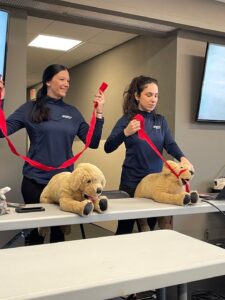
- Take a Pet First Aid Class – Many animal shelters, veterinary clinics, and pet supply stores offer hands-on training.
- Practice Emergency Scenarios – Just like fire drills, running through “what if” situations can help you stay calm under pressure.
- Update Your Kit Regularly – Replace expired items and check supplies every few months.
- Know Your Dog’s Normal Vitals – Learn their typical heart rate, breathing rate, and gum color so you can quickly spot abnormalities.
- Keep Emergency Numbers Handy – Store them in your phone and post them somewhere visible at home. I like keeping mine on my phone, posted in my pantry, and in the glovebox of my car. Besides phone numbers, I also have the address and hours of the two nearest pet emergency hospitals.😊
National Pet First Aid Awareness Month is a good time to become certified in pet first aid skills and evaluate your pet first aid kit. By learning a few essential skills and keeping the right tools on hand, you can render proper care to your dog in those early moments before getting to the vet or nearest pet emergency hospital. If you have any questions about CPR programs or how to build a first aid kit, please reach out to me directly. I am only a bark away!
Carolyn
Carolyn’s Corner
Carolyn Lapps is the General Manager at Fetch Family Pet Resort. Her love and passion for all animals began at a young age and has led to a career. She is frequently consulted on pet socialization and family integration issues and is highly regarded for her experience with domestic animal management and care.